
How to Choosing a Trusted Real Estate Developer in Egypt? Criteria & Success Formula 2026
Reserve your unit now and take your first steps towards successful investment.
If you have any questions, please fill out the following form, and we will contact you as soon as possible.
Choosing a trusted real estate developer in Egypt
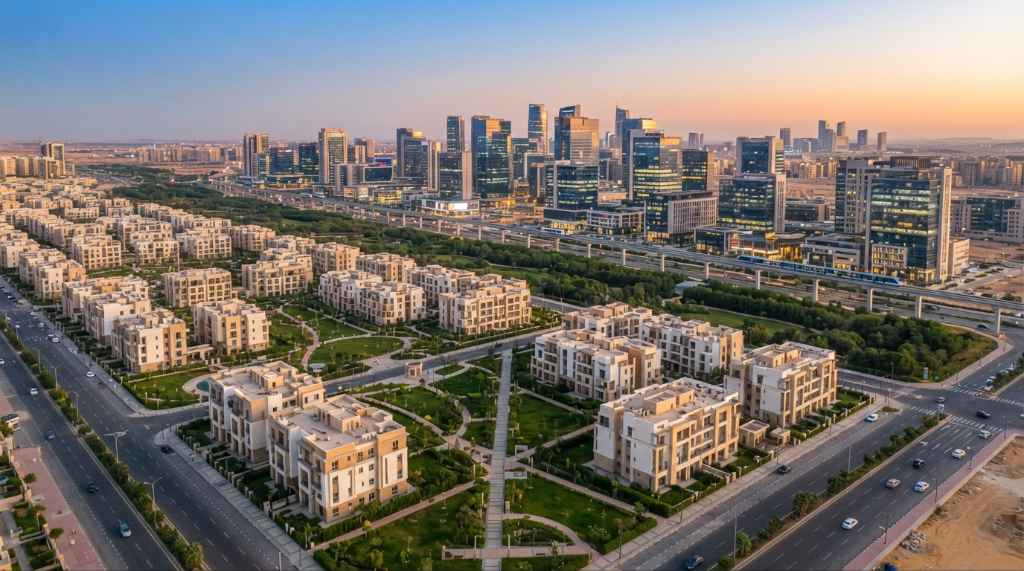
Egypt’s real estate market—specifically East Cairo and new urban cities like Fifth Settlement and New Cairo—is experiencing unprecedented investment momentum. In 2026, the region topped national contractual sales indicators, capturing more than 39% of Egypt’s total real estate market share. Amid this rapid expansion and the proliferation of residential and commercial projects across prime corridors like North and South Teseen Street, the Golden Square, and Beit Al Watan, both local and Arab buyers face a critical challenge: choosing a trusted real estate developer in Egypt to ensure lucrative returns while avoiding delays or project defaults.
- Section 1: Understanding Real Estate Reliability and the Pillars of Evaluating Developers in Fifth Settlement and New Cairo
- Section 2: The Engineering and Financial Formula for Choosing a Trusted Real Estate Developer in New Cairo (2026)
- Section 3: The Practical Roadmap and FAQs for a Secure Real Estate Investment in Egypt (2026)
- Executive Summary
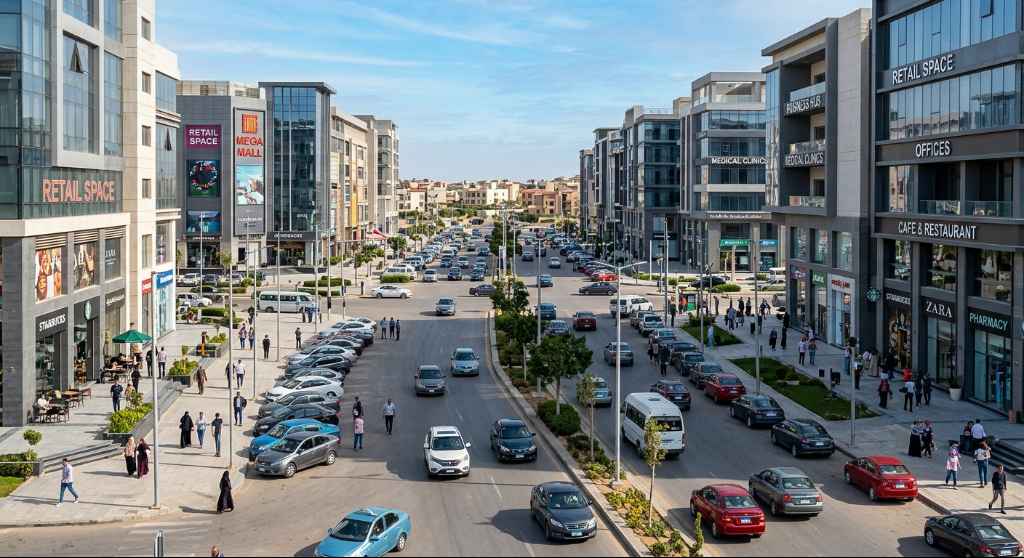
Own your commercial property Your administrative office Your medical clinic
In the best locations in New Cairo
Section 1: Understanding Real Estate Reliability and the Pillars of Evaluating Developers in Fifth Settlement and New Cairo
Purchasing a property is no longer merely about selecting walls and square footage; it is a strategic investment decision that depends by over 70% on the competence and reputation of the developing entity. This makes it essential to dissect the core pillars of real estate developer credibility, thoroughly examine a developer track record, and verify real estate delivery commitment. Together, these factors form the strict equation required for a secure real estate investment in Egypt amid today’s shifting economic landscape.
1. Pillars of Real Estate Developer Credibility: Separating Promises from Execution
True real estate developer credibility is not built on massive advertising campaigns or billboards lining the highways of New Cairo; rather, it is earned through a consistent record of financial, legal, and engineering transparency. When evaluating developers with strong financial solvency in Fifth Settlement, investors should look for three fundamental indicators:
Legal Standing and Chain of Title: A reliable developer holds final, registered land allocation contracts free from any legal disputes with the New Urban Communities Authority (NUCA) or the New Cairo City Development Authority.
Corporate Governance and Institutional Structure: Companies led by boards with deep engineering and financial expertise carry drastically lower operational risks than newly formed, single-owner entities that lack structured crisis-management plans.
Contractual Transparency: Clear preliminary contract terms, the absence of hidden fees, and fair handover and maintenance clauses are the true hallmarks of credibility.
2. Developer Track Record: The True Mirror of Construction Quality
A developer track record is the single most honest indicator of a company’s ability to turn architectural blueprints into tangible reality. In a market as demanding as Fifth Settlement—where architectural styles range from Neo-Classical to ultra-modern and expectations for smart, hotel-grade finishes are exceptionally high—prospective buyers must inspect a developer’s previously delivered projects in person.
When evaluating past developments, ask the following critical questions:
Have the developer’s older compounds maintained their aesthetic appeal, cleanliness, and landscape quality several years after handover?
What is the real-world quality of exterior facades, and did the builder use weather-resistant materials suited to New Cairo’s desert climate?
Did the company deliver all promised integrated amenities—such as commercial hubs, clubhouses, and 24/7 security systems—or did they remain unfinished promises?
3. Real Estate Delivery Commitment and Its Direct Impact on Capital Value
Real estate delivery commitment is the ultimate litmus test that separates top-tier builders from struggling operators. In Egypt’s 2026 real estate market, inflationary pressures on construction materials and rising building costs have pushed undercapitalized developers to delay handover schedules to rebalance their cash flows at the buyer’s expense.
A delivery delay of just one or two years does far more than postpone your move-in date; it directly impacts your bottom line by:
Eroding projected rental yields or capital appreciation from resale.
Burdening buyers with extended external rent expenses and frozen liquidity.
Depressing the project’s relative market value compared to neighboring compounds delivered on schedule.
Consequently, a seasoned developer maintains robust engineering and financial contingency plans to guarantee on-time delivery without compromising construction standards.
Comparison Table: Developer Tiers and Their Impact on Investment Safety in New Cairo
| Developer Tier | Financial Solvency & Execution Capacity | Delivery Commitment & Build Quality | Investment Risk Level | Medium-to-Long-Term ROI Outlook |
| Tier 1 (Market Leaders) | Very strong, backed by massive investment portfolios and institutional capital. | Strict adherence to timelines and superior engineering specs (e.g., Flat Slab, thermal/acoustic insulation). | Virtually zero | Stable, high yield, with strong liquidity upon resale. |
| Tier 2 (Mid-Market) | Moderate to good; partially reliant on ongoing phase sales to fund construction. | Generally reliable, with a minor risk of limited delays (6 to 12 months). | Moderate | Solid returns, provided the specific project’s cash flow is vetted. |
| Emerging / New Entrants | Limited; vulnerable to disruptions from spikes in building material costs. | High risk of construction slowdowns or extended handover delays. | Very high | Unpredictable; potential for fast early gains, but carries substantial risk. |
Advisory Perspective on the Fifth Settlement Market
To conclude this opening section on evaluating developers, it is vital to recognize that Fifth Settlement and New Cairo are not a single, uniform real estate zone. Investing in Beit Al Watan differs substantially from buying in the Golden Square, New Narges, or Mostakbal City further east. Each sub-market imposes distinct technical, regulatory, and infrastructure requirements on developers. Understanding this geographic and economic landscape is the foundational step toward achieving a secure real estate investment in Egypt.
Section 2: The Engineering and Financial Formula for Choosing a Trusted Real Estate Developer in New Cairo (2026)
Having established the conceptual framework for evaluating real estate developer credibility and auditing a developer track record in Section 1, we now move to the practical, analytical phase—what we refer to in real estate advisory as the “2026 Success Formula.” Rather than relying on glossy marketing brochures, this formula is anchored in hard engineering metrics and financial indicators that separate builders who create lasting, generational value from those merely selling promises on paper.
In a fiercely competitive market like Fifth Settlement and New Cairo—where mega-projects sit side by side across the Golden Square, Bin Zayed Axis, Beit Al Watan, and New Narges—equipping yourself with financial and technical due diligence tools is the only way to guarantee a secure real estate investment in Egypt.
1. Engineering and Structural Due Diligence: Looking Beyond Glass Facades
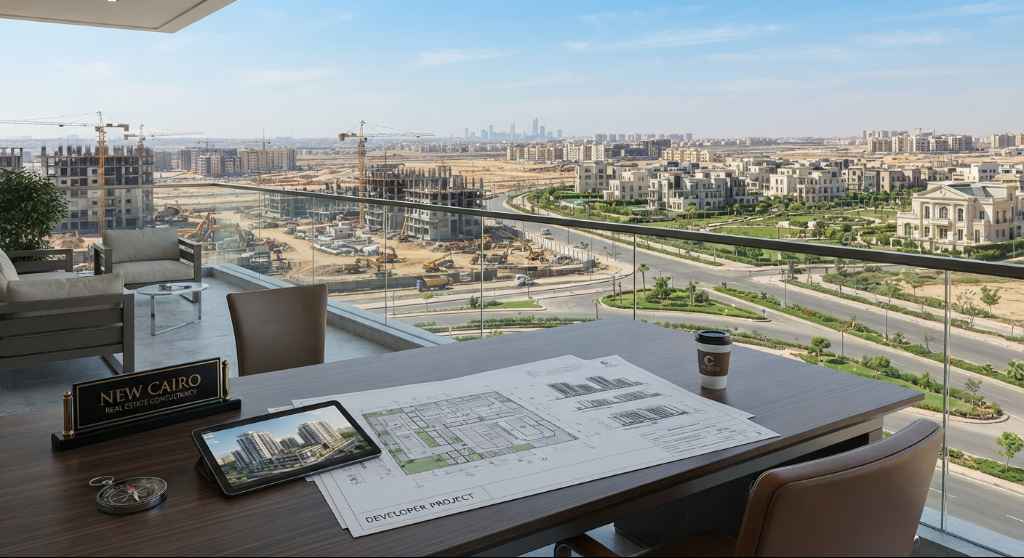
Buyers are frequently captivated by 3D architectural renders and sleek glass exteriors, often overlooking the structural skeleton and core infrastructure that dictate a building’s lifespan and future maintenance costs. When choosing a trusted real estate developer in Egypt—and specifically within New Cairo’s premium corridors—look for strict adherence to modern building codes, including:
Advanced Structural Systems: Top-tier developers utilize Flat Slab concrete systems rather than traditional dropped-beam ceilings. This gives homeowners complete flexibility to modify interior layouts without compromising structural integrity, while providing higher clear ceiling heights that enhance natural light and spatial luxury.
Effective Thermal and Acoustic Insulation: Given East Cairo’s desert climate and growing urban density, leading builders incorporate Hollow Wall Insulation systems or high-density insulated bricks paired with Double Glazing windows. This reduces energy consumption by up to 35% and significantly boosts the property’s long-term market value.
Partnerships with Tier-1 Engineering Consultants: The involvement of an internationally or regionally renowned engineering consultancy or facility management firm serves as a powerful third-party endorsement of construction quality and long-term asset upkeep.
2. Financial Solvency and Funding Models: How to Prevent Project Stalls
Amid the economic shifts and fluctuating construction costs of 2026, a developer’s funding model is the single biggest determinant of real estate delivery commitment. In the Egyptian market, developers fall into two distinct financial categories:
The Self-Funded Developer: This developer possesses sufficient liquid capital to cover land acquisition costs and a substantial percentage of construction before launching public sales. Because they are insulated from temporary sales slowdowns or market volatility, they frequently deliver ahead of schedule.
The Sales-Driven Developer: This operator relies almost entirely on customer down payments and installments to finance excavation and concrete work. Any dip in sales velocity or sudden spike in steel and cement prices immediately slows down site progress and triggers handover delays.
Golden Rule for Investors: Before signing a contract, conduct an on-site visit. If actual construction progress on the ground already exceeds 30% to 40% prior to or alongside the sales launch, it is a strong indicator of genuine financial solvency.
3. Analyzing Contract Terms and Legal Safeguards to Protect the Buyer
When it is time to sign, choosing a trusted real estate developer in Egypt must translate into clear, balanced legal clauses that protect both parties and eliminate future loopholes:
Binding Delivery Schedule: Avoid contracts with vague or conditional delivery dates lacking a clearly defined grace period—which should never exceed 6 months under standard circumstances.
Balanced Penalty Clauses: A developer confident in its execution capabilities will not hesitate to include a clear compensation or penalty clause for late delivery, mirroring the late-payment penalties imposed on buyers.
Technical Delivery Specifications: Ensure a technical annex is attached to the contract detailing exact finishing materials (marble types, elevator brands, aluminum and joinery specs, and smart infrastructure readiness) so specifications cannot be downgraded at handover.
Maintenance Deposit Governance: Verify that the maintenance deposit (typically ranging between 7% and 10% in New Cairo) is held in a dedicated escrow or independent account strictly earmarked for compound upkeep, rather than used to cross-finance the developer’s other projects.
Practical Tool: The 100-Point Developer Evaluation Matrix
To streamline your decision-making, score any real estate company in Fifth Settlement or New Cairo using this advisory matrix before paying a reservation fee:
| Evaluation Criterion | Weight | Best-in-Class Indicators (Full Score) | Red Flags (Require Immediate Pause & Review) |
| Land Legal Status & Ministerial Decree | 25% | Land is fully paid; Ministerial Decree and building permits are officially issued. | Land is still under allocation, or installments to NUCA are overdue. |
| Developer Track Record & Delivery | 25% | At least 3 previous projects delivered on time with verified build quality. | History of repeated delays, or zero completed projects on the ground. |
| On-Site Construction Progress | 20% | Active, high-density site work aligned with the announced timeline. | Empty land or only perimeter billboards months after launch. |
| Financial Solvency & Funding Model | 15% | Strong self-funding reserves or institutional backing ensuring continuous build. | Heavy reliance on “0% down, 12-year installment” promos to raise quick cash. |
| Contract Clarity & After-Sales Service | 15% | Balanced contract, detailed technical annex, and reputable facility management. | One-sided adhesion contracts, missing specs, and frequent resident complaints. |
How to Read Long Payment Plans in Fifth Settlement Smartly
In 2026, developers across New Cairo actively compete for buyers by offering extended payment plans spanning 8, 10, or even 12 years with down payments starting as low as 5% or 10%. Here, investors must apply a critical financial rule: ultra-long payment plans with minimal down payments offered by a moderately capitalized developer pose the single greatest threat to real estate delivery commitment.
A financially sound developer balances payment flexibility with the cash flow required for construction—typically offering substantial cash discounts or shorter plans (3 to 5 years) because they have the capital to build, while using longer plans as a calculated competitive tool. Conversely, companies that overextend payment terms without deep financial reserves put their projects at severe risk the moment construction costs rise.
With these technical and financial tools in hand, you are equipped to objectively evaluate any opportunity in East Cairo. In Section 3, we will walk through a step-by-step buying roadmap and answer the most pressing investor FAQs to ensure a smooth, profitable transaction.
Section 3: The Practical Roadmap and FAQs for a Secure Real Estate Investment in Egypt (2026)
After exploring the foundational pillars of real estate developer credibility in Section 1 and dissecting the engineering and financial evaluation formula in Section 2, we now arrive at the final, action-oriented stage. The goal of this section is to translate technical due diligence into an actionable, step-by-step protocol that protects you from common buyer pitfalls and directly answers the critical questions both Google’s search algorithms and serious investors ask about choosing a trusted real estate developer in Egypt for maximum returns with minimal risk.
Practical Buying Roadmap: 6 Steps Before Signing Your New Cairo Property Contract
To put our 2026 success criteria into practice, follow this strict verification sequence before transferring any funds or signing an Expression of Interest (EOI):
Verify Official Legal Documentation: Request to inspect copies of the land allocation contract, installment payment receipts to the New Urban Communities Authority (NUCA), the approved Ministerial Decree, and active building permits issued by the New Cairo City Development Authority. A reputable developer will readily allow you or your legal counsel to review these documents at their headquarters.
Conduct Unannounced Site Visits to Past Projects: Do not rely solely on a sales-guided tour of a polished show villa (mock-up). Visit a compound the developer delivered 3 to 5 years ago in Fifth Settlement, El Shorouk, or the New Administrative Capital. Speak directly with residents and security personnel about maintenance standards, utility reliability, and how quickly management resolves operational issues.
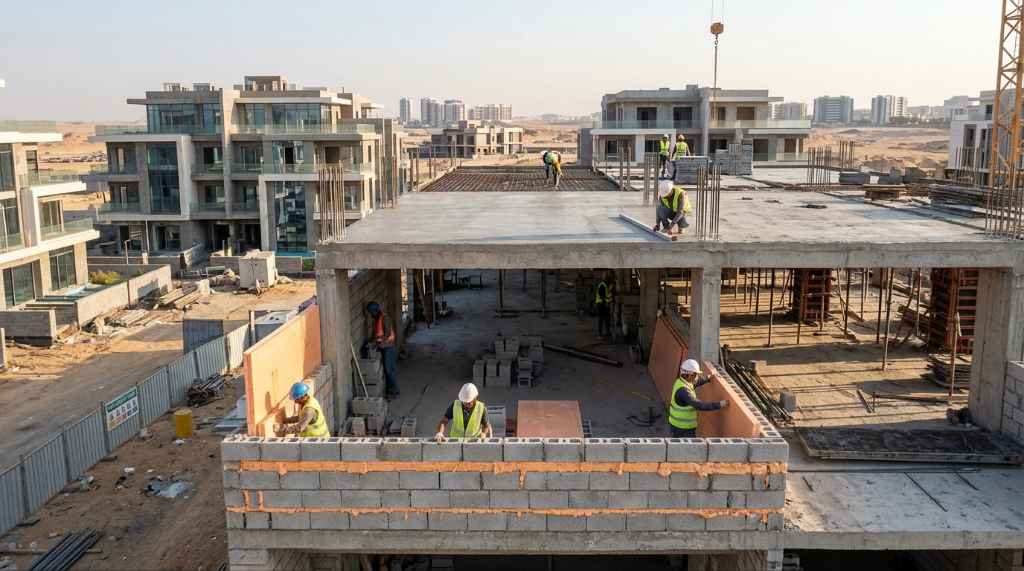
Inspect Current Construction Site Activity: Confirm that the plot location matches the master plan and observe the volume of heavy machinery and active labor on-site. High-density, ongoing construction on the ground is the strongest physical proof of real estate delivery commitment.
Audit Financial Backing and Strategic Partners: Review the company’s commercial register, shareholder structure, financing banks, and contracted general contractors and engineering consultants. Partnerships with established engineering firms enforce strict oversight on build quality and timeline adherence.
Commission a Specialized Legal Contract Review: Hire a real estate attorney to examine the draft contract before signing. Focus on exact handover dates, late-delivery penalty clauses, area variance tolerances (which should legally never exceed 3% to 5%), and resale or assignment terms.
Document Every Marketing Promise in Writing: Any verbal assurance made by a sales advisor—whether regarding unit views, underground parking slots, assignment fee waivers, or upgraded finishing specs—must be explicitly written into a contract addendum. Legally, only what is written in the signed contract holds weight.
Comparison Table: Buying Strategies by Investment Goal in Fifth Settlement (2026)
The weight you assign to each evaluation criterion depends on your primary objective. The table below outlines strategic priorities for different buyer profiles:
| Buying Objective | Top Developer Priority | Best-Suited Zones in New Cairo | 2026 Advisory Insight |
| Immediate or Near-Term Family Living | Developer track record and active, proven facility management on the ground. | Golden Square, Lotus, Al Andalus, and New Narges. | Focus on ready-to-move units or deliveries within 12 months to avoid ongoing rent costs and finishing inflation. |
| Long-Term Capital Appreciation & Resale | Massive financial solvency and brand equity capable of driving up price-per-square-meter. | Narges Extension, North Rehab, and Mostakbal City. | Buying during initial launch phases with a Tier-1 developer yields the highest capital gains upon completion. |
| Steady Rental Yield (Residential or Commercial) | Proven expertise in commercial/admin operations and attracting anchor retail brands. | North & South Teseen Street, and Mohamed Naguib Axis. | For commercial and administrative units, the facility operator is just as critical as the developer itself. |
Frequently Asked Questions (FAQ) About Choosing a Trusted Real Estate Developer in Egypt
1. What is the single strongest indicator of real estate developer credibility in Egypt?
The most reliable indicator is proven execution across past developments paired with clean legal and financial standing on the current land plot. Companies that have delivered prior compounds on schedule with high build quality—and secure their Ministerial Decree and building permits before launching aggressive sales campaigns—offer the highest level of security.
2. How can I verify real estate delivery commitment before committing to a purchase?
Verify delivery reliability through three steps: first, check the developer’s historical track record to see if past handovers experienced delays; second, ensure your contract contains a binding delivery timeline with a clear late-delivery penalty clause; and third, inspect current on-site construction progress relative to the announced handover date.
3. Is buying from a newer developer in New Cairo always a high-risk move?
Not necessarily, provided the new entity is backed by substantial capital reserves or represents a strategic alliance between established contracting giants and seasoned real estate investors—and only if the land is fully paid and active construction is already underway. Conversely, undercapitalized startups relying purely on buyer deposits to fund initial excavation carry high default risk and should be avoided.
4. What is the difference between a Ministerial Decree and a Building Permit, and why do both matter?
A Ministerial Decree is the official approval of the project’s master plan, zoning, and footprint by the Ministry of Housing and NUCA, whereas a Building Permit authorizes physical excavation and concrete construction for specific buildings or phases. Having both in place guarantees the project is 100% legally compliant and protected from stop-work orders, forming the bedrock of a secure real estate investment in Egypt.
5. Are 10- to 12-year payment plans an advantage or a warning sign?
Extended payment plans are a genuine advantage when offered by a Tier-1 developer with deep land banks and self-funding capacity to absorb construction costs independently. However, they become a major red flag when offered by mid-tier or emerging developers as a desperate tactic to generate quick cash flow without financial reserves to hedge against decade-long building inflation.
6. How does a facility management company impact my property’s future value?
A professional facility management operator maintains compound cleanliness, elevator reliability, landscaping, and security long after handover. Strong post-handover management preserves both the aesthetic appeal and market reputation of the community, ensuring higher rental demand and stronger resale values even a decade after delivery.
Executive Summary
In 2026, choosing a trusted real estate developer in Egypt is no longer a matter of guesswork or persuasive advertising; it is a disciplined equation built on verified legal standing, independent financial solvency, certified engineering standards, and tangible on-site execution. In a high-opportunity market like Fifth Settlement and New Cairo, taking the time to audit developers against objective benchmarks serves as your strongest shield—protecting your capital and transforming your property into a resilient, wealth-building asset for generations.

Let's discuss your next move >
Our specialized team will contact you ASAP.