
Commercial Investment Gamal Abdel Nasser and Mohamed Naguib Axes 5th Settlement
Reserve your unit now and take your first steps towards successful investment.
If you have any questions, please fill out the following form, and we will contact you as soon as possible.
Commercial investment Gamal Abdel Nasser and Mohamed Naguib axes
When discussing real estate investment in Egypt—specifically within the modern urban development locomotive of “New Cairo“—we are not merely talking about concrete and walls. Rather, we are analyzing cash flows, population densities, and nonstop pedestrian and consumer traffic. Over the past few years, the commercial, administrative, and medical real estate market has undergone an unprecedented paradigm shift. Savvy investors seeking tangible returns no longer settle for traditional residential apartments; instead, attention has decisively pivoted toward the most lucrative and stable long-term investment havens: retail shops, corporate administrative offices, and medical clinics situated in high-vitality corridors.
This is where the significance of commercial axes New Cairo stands out clearly as the primary arteries feeding the entire market. If we want to put our finger on the true pulse—the beating heart connecting major residential communities with bustling districts and longitudinal and latitudinal highways—we find ourselves looking at two investment giants that no discerning investor can afford to overlook: Gamal Abdel Nasser Axis and Mohamed Naguib Axis.
Pursuing commercial investment Gamal Abdel Nasser and Mohamed Naguib axes is no longer just one option among many; it has become the true benchmark of a smart investment portfolio capable of generating capital appreciation and rental yields that outpace inflation while securing steady, reliable monthly cash flows. In this comprehensive, detailed guide—crafted from extensive field experience in the Egyptian real estate market—we break down every nuance associated with these two axes to give you an integrated analytical vision that empowers you to make your investment decision with confidence and clarity.
- Section One: Strategic Anatomy of Commercial Axes in New Cairo and the Pulse of Commercial Investment
- Section Two: Comparing New Cairo Commercial Projects and Analyzing Opportunities Between Gamal Abdel Nasser and Mohamed Naguib Axes
- Section Three: Future Outlook, ROI Calculations, and a Safe Execution Roadmap
- Final Conclusion
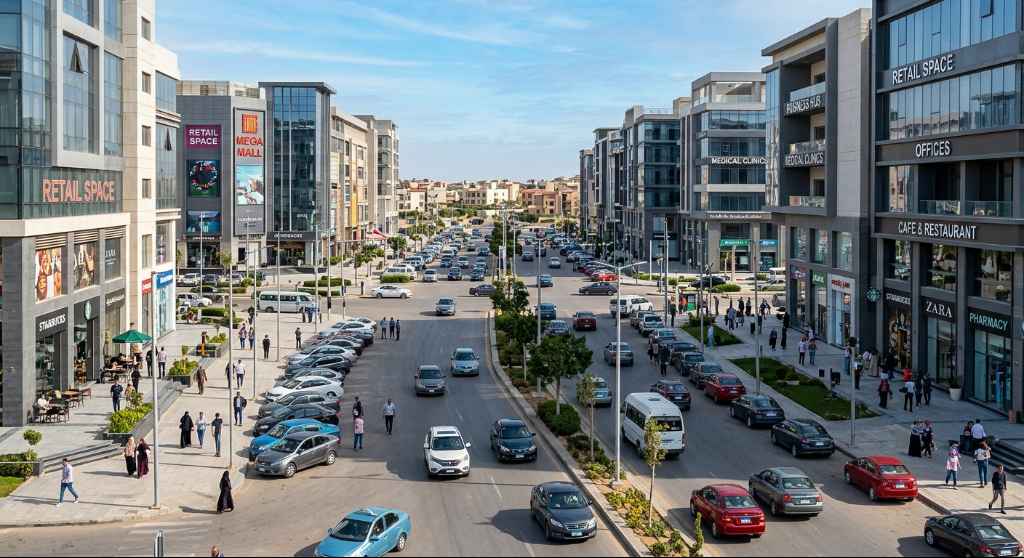
Own your commercial property Your administrative office Your medical clinic
In the best locations in New Cairo
Section One: Strategic Anatomy of Commercial Axes in New Cairo and the Pulse of Commercial Investment
1. A Comprehensive Overview of Commercial Investment and Commercial Axes in New Cairo
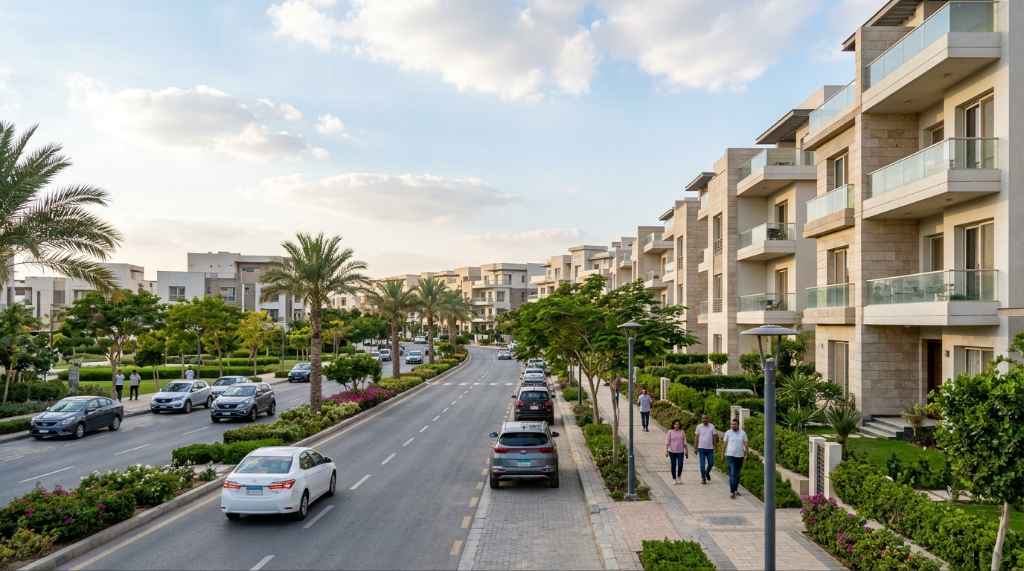
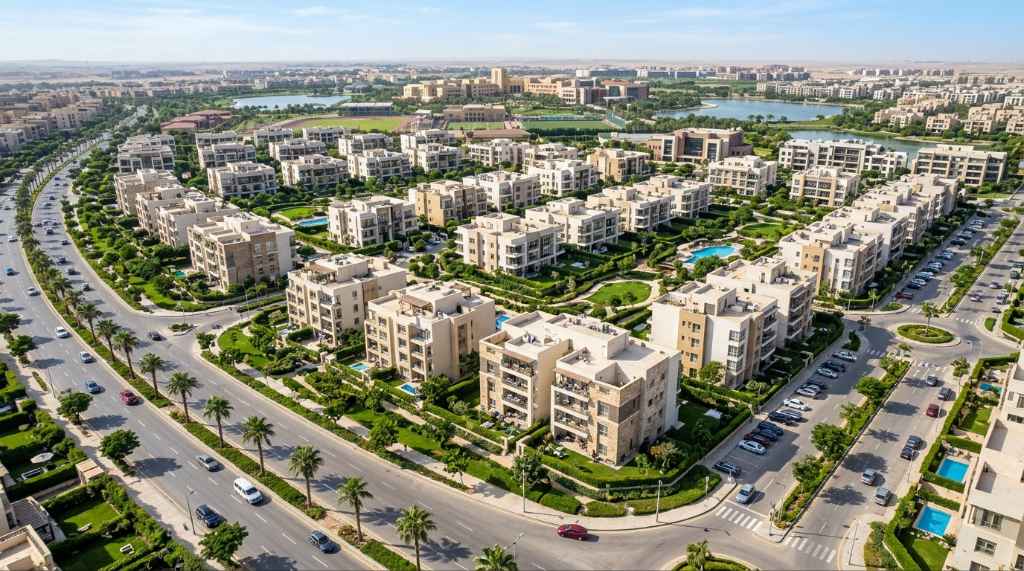
New Cairo is distinguished by a unique urban master plan built around a network of major corridors linking North and South Teseen Streets, the Middle Ring Road, Suez Road, and Ain Sokhna Road. This infrastructure has transformed commercial axes New Cairo into fertile, model environments for the success of any commercial or service-oriented venture.
In the vocabulary of real estate experts, a commercial axis is far more than a wide boulevard lined with buildings; it is an integrated investment magnet where fundamental success drivers converge:
Surrounding Population Density: Proximity to established, inhabited residential communities or rapidly delivering districts (such as Beit Al Watan, New Nargis, Al Andalous, Al Mostathmereen, and the Banafseg District).
Seamless Accessibility: Clear entry and exit points connecting the corridor directly to primary highways.
Service Diversity: Synergy across commercial activities (restaurants, cafés, retail brands), administrative spaces (corporate headquarters and offices), and medical facilities (specialized centers, clinics, and laboratories).
When we measure these benchmarks against the map of the Fifth Settlement, Gamal Abdel Nasser Axis and Mohamed Naguib Axis sit squarely at the top of the hierarchy, thanks to their unmatched capacity to absorb millions of daily commuters and their role as pivotal junction points bridging established neighborhoods with modern urban expansions.
2. Urban Planning Regulations and Purchasing Power: Why Do These Two Axes Lead the Market?
No seasoned investor can ignore the immense purchasing power surrounding these two corridors. Residents and visitors in the districts flanking both axes enjoy high standards of living and consistent year-round spending capacity—a factor that translates directly into the operational success of any commercial development launched there.
Mohamed Naguib Axis: Serves as the vital eastern and central gateway connecting Suez Road and the Ring Road to the heart of the Fifth Settlement, extending all the way to the southern districts, Beit Al Watan, and Al Lotus. It experiences heavy traffic throughout the day, making it the premier destination for investors searching for shops for sale 5th Settlement that boast direct frontages and exceptional visual exposure.
Gamal Abdel Nasser Axis: Stretches as a dynamic longitudinal artery linking key districts and cutting straight through densely populated residential zones. This makes it a preferred hub for daily shopping, dining, entertainment, and essential medical and administrative services. Investment here thrives on “sustainable demand”—driven not by fleeting seasonal trends, but by the everyday consumption of hundreds of thousands of households.
Key Comparison Table: Characteristics and Traffic Flow on Mohamed Naguib and Gamal Abdel Nasser Axes
| Comparison Criteria | Mohamed Naguib Axis | Gamal Abdel Nasser Axis |
| Strategic Nature | A primary artery linking the Ring Road and Suez Road to the southern and eastern depths of the city | A longitudinal corridor cutting directly through high-density residential neighborhoods and emerging districts |
| Traffic Flow Profile | High-volume transit and commercial traffic (fast connectivity + retail destination) | Sustained local and regional traffic (intensive daily neighborhood consumption) |
| Dominant Project Types | Large-scale commercial and administrative malls, flagship franchises, and integrated medical hubs | Service-oriented retail shops, restaurants and cafés, clinics, and daily convenience centers |
| Expected Rental Yield | Exceptionally high, driven by expansive commercial frontages and prime land value | High and remarkably stable, backed by continuous everyday demand from local residents |
| Target Investor Profile | Major investors, flagship brands, and buyers targeting rapid capital appreciation | Investors seeking immediate operation, fast leasing turnaround, and steady recurring income |
3. Geographical Mapping and Demographic Distribution: The Lifeline of the Fifth Settlement
To grasp the true value of any commercial property, we must read the map through the lens of spatial analysis. Mohamed Naguib Axis intersects with premier thoroughfares such as North Teseen Street, serving key zones including Al Mostathmereen, Al Lotus, Al Nargis, a substantial portion of the First Settlement, and the main artery of Beit Al Watan. This intersection grants commercial developments along the corridor a rare competitive edge: rapid access to and from virtually any point in New Cairo within minutes.
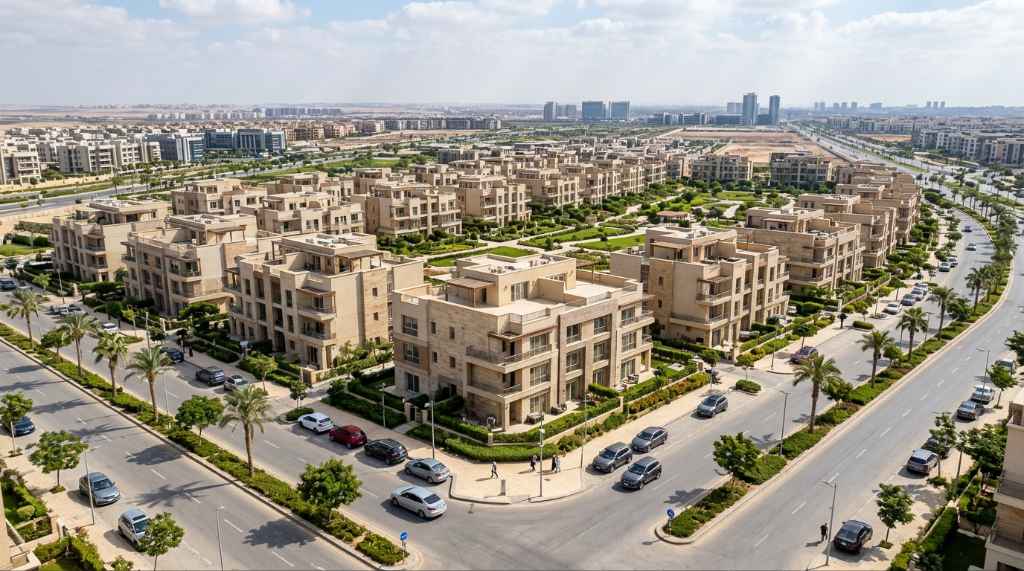
Conversely, Gamal Abdel Nasser Axis plays a uniquely complementary role. Running alongside high-density residential areas such as Al Mostathmereen, Al Andalous, Beit Al Watan, and New Nargis, it is the everyday boulevard residents rely on for daily errands, weekly groceries, healthcare, and professional services. Consequently, commercial units along this axis consistently enjoy high occupancy rates and rapid capital turnover.
When evaluating opportunities for shops for sale 5th Settlement, units located on these two axes consistently command the highest demand from both individual investors and institutional funds. The risk profile here is minimal compared to inner neighborhood streets that lack visibility or heavy vehicular flow.
4. Investment Activity Diversity: Why Commercial, Administrative, and Medical Units Succeed Together
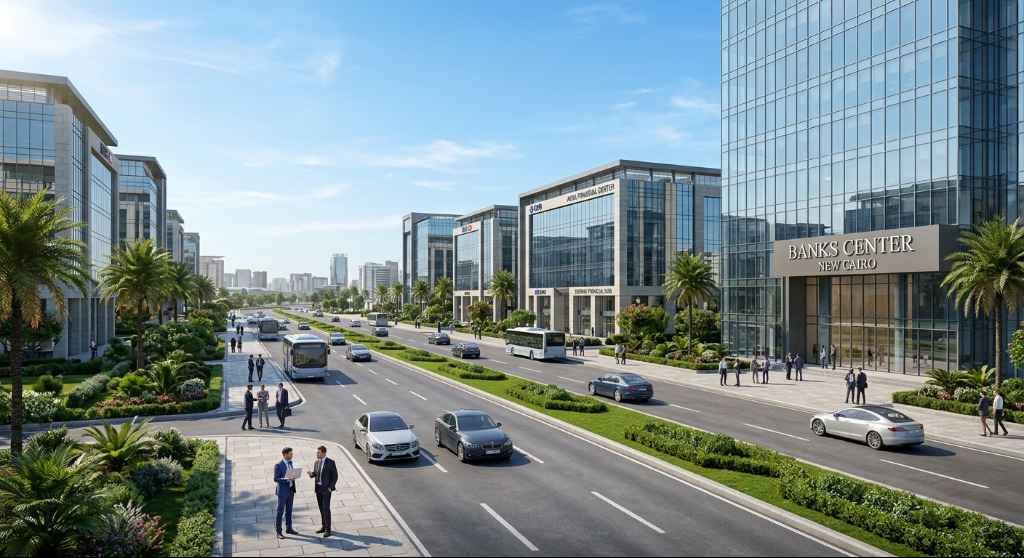
Successful master planning along these corridors relies not on random space allocation, but on a carefully engineered commercial mix. Astute investors understand that achieving a successful medical and administrative investment alongside retail spaces is what unlocks the true long-term value of a mixed-use development (Commercial, Administrative, Medical – CAM Mix).
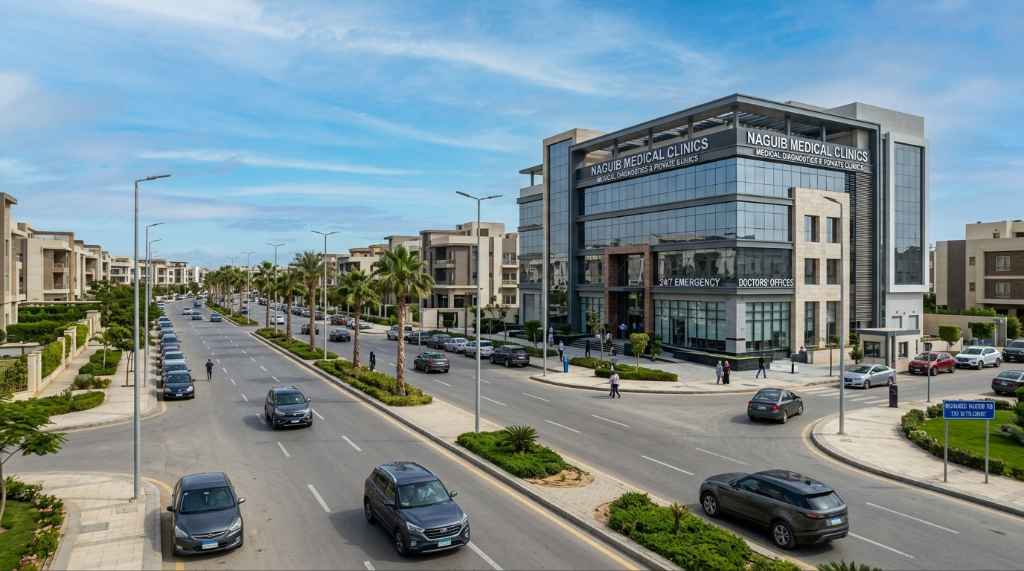
Medical Units: Demand continues to climb steadily due to a relative shortage of specialized healthcare complexes in newer districts. Being situated on a major thoroughfare like Mohamed Naguib or Gamal Abdel Nasser ensures effortless access for patients coming from across the Fifth Settlement.
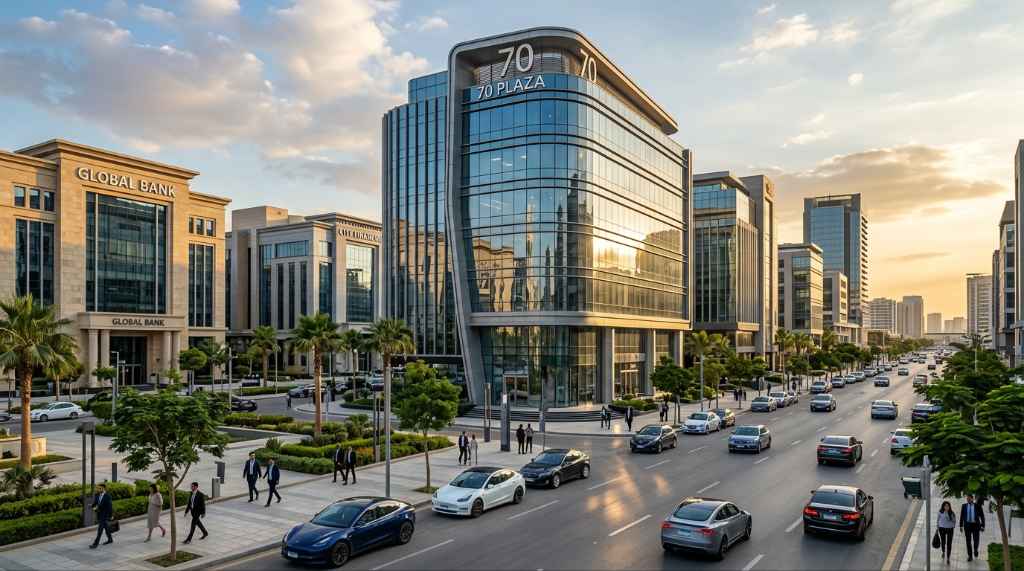
Administrative Units: Contracting firms, engineering consultancies, real estate brokerages, and tech startups actively choose these two axes for their corporate headquarters to stay close to clients and simplify employee commutes.
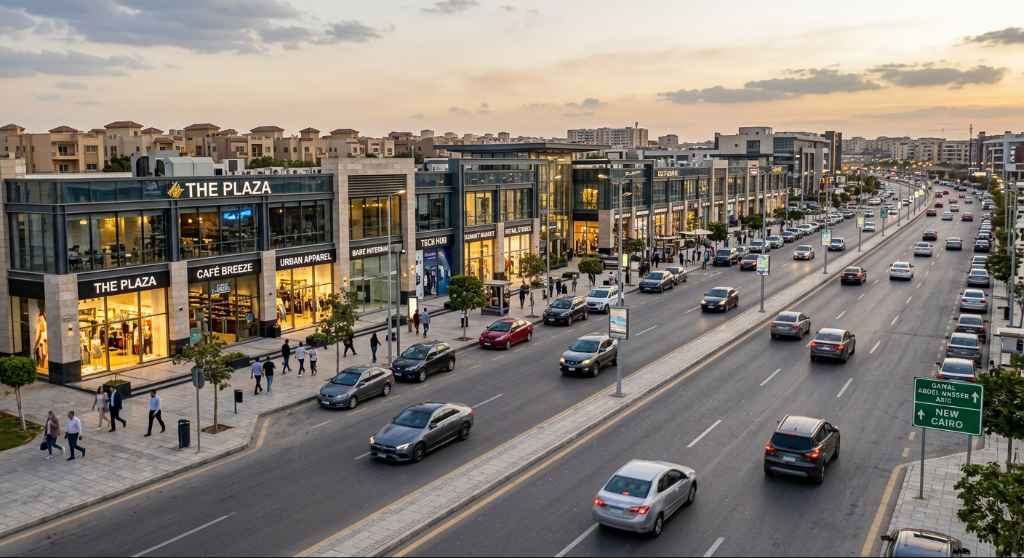
Retail & F&B (Restaurants and Cafés): These remain the primary engine for rapid returns, attracting major franchises and retail chains seeking high-visibility signage and heavy footfall.
Frequently Asked Questions (FAQ) About Commercial Investment on Gamal Abdel Nasser and Mohamed Naguib Axes
Q: Why is commercial investment on Gamal Abdel Nasser and Mohamed Naguib axes currently outperforming residential investment?
A: Commercial, administrative, and medical properties deliver significantly higher rental yields than residential units, alongside built-in annual rental escalations (typically ranging between 10% and 15% compounded). Moreover, longer commercial lease terms guarantee predictable, stable cash flows for investors.
Q: How much do architectural design and mall layout impact investment success on these axes?
A: Enormously. Smart engineering, ample underground parking capacity, dedicated customer service zones, and panoramic glass facades facing directly onto the main axis are decisive factors in attracting top-tier brands and financially solid tenants.
Section Two: Comparing New Cairo Commercial Projects and Analyzing Opportunities Between Gamal Abdel Nasser and Mohamed Naguib Axes
Section Two Introduction: How Do You Choose the Right Commercial Project for Your Investment Portfolio?
Having explored the strategic and geographical significance of both Gamal Abdel Nasser Axis and Mohamed Naguib Axis in Section One, we now shift to the practical, hands-on phase that matters most to any investor ready to make a purchase. The Fifth Settlement real estate market is crowded with dozens of developments, yet simply sitting on a major thoroughfare does not automatically guarantee a project’s success.
True success in commercial investment Gamal Abdel Nasser and Mohamed Naguib axes hinges on comparing New Cairo commercial projects using strict financial and operational benchmarks—including the developer’s track record, facility management, loading percentages, floor plate layouts, and tenant mix. In this section, we give you a clear roadmap to distinguish high-performing developments from ordinary ones, while breaking down how to maximize returns across retail, administrative, and medical units.
1. Professional Evaluation Criteria When Comparing New Cairo Commercial Projects
As you begin searching for shops for sale 5th Settlement or administrative and medical spaces, you will encounter plenty of glossy marketing pitches. As a real estate consultant, I always advise applying a five-point “Due Diligence Matrix” before signing any contract:
Developer Track Record and Operational History: Do not look solely at how many buildings a developer has constructed; examine the projects they have actually delivered and operated. A commercial building without professional management eventually deteriorates into a low-yielding concrete shell.
Property and Facility Management: Partnering with reputable local or international management operators during the construction phase is your strongest guarantee of attracting flagship brands and maintaining top-tier security, cleanliness, and maintenance—driving your unit’s market and rental value higher year after year.
Architectural Design and Traffic Flow: A thriving mall is engineered to guide visitors effortlessly to every corner, across both ground and upper levels, through smart placement of panoramic elevators, escalators, and multiple entry points.
Loading Percentage: In commercial and administrative developments, the ideal loading ratio ranges between 25% and 35%. An inflated loading percentage shrinks your usable net area, making the unit far less attractive to future tenants.
Strict Activity Zoning: Dedicated entrances and separate elevator cores for administrative and medical floors—completely isolated from the noise and foot traffic of retail and F&B zones—are essential to preserve privacy and calm for clinics and corporate offices.
2. Deep-Dive Analysis: Retail vs. Administrative and Medical Investment Along Both Axes
Gamal Abdel Nasser Axis and Mohamed Naguib Axis each possess distinct dynamics that shape how capital should be allocated across the three core asset classes. Here is how to structure a successful medical and administrative investment alongside retail units on these two corridors:
First: Commercial Units (Retail & F&B)
On Mohamed Naguib Axis: Medium-to-large retail units (60 sqm and above) excel here, particularly ground-floor spaces featuring outdoor seating areas. The corridor’s role as a primary transit artery makes it ideal for flagship showrooms, banks, automotive dealerships, and major restaurant and café chains (including drive-thru concepts).
On Gamal Abdel Nasser Axis: Daily convenience and neighborhood retail units (35 to 80 sqm) shine brightest here. Because the axis borders densely populated residential communities, the highest-performing businesses include pharmacies, supermarkets, bakeries, beauty centers, and quick-service restaurants fueled by local residents and delivery orders.
Second: Administrative Units (Corporate Offices)
Administrative offices along these two axes represent a winning play for investors seeking long-term tenant stability and lower finishing costs compared to retail spaces. Large corporations, engineering consultancies, and tech firms favor locations on primary corridors to streamline commutes for staff and clients. The most sought-after office sizes range from 50 to 150 sqm, ideally delivered fully finished with central air conditioning to accelerate immediate leasing upon handover.
Third: Medical Units (Clinics & Healthcare Centers)
Executing a successful medical and administrative investment requires a clear grasp of healthcare demand in the Fifth Settlement. The residential neighborhoods surrounding Gamal Abdel Nasser and Mohamed Naguib axes are expanding rapidly, outpacing the current supply of specialized medical complexes.
Clinics ranging from 40 to 75 sqm enjoy the strongest demand from physicians and specialists.
Key operational essentials include generous parking capacity, dedicated stretcher-sized elevators, and MEP (mechanical, electrical, and plumbing) infrastructure compliant with Ministry of Health and Medical Syndicate licensing standards.
3. Detailed Comparison Table: Investment Metrics by Unit Type on Both Axes
To help you align your choice with your budget and financial goals, the table below outlines the core differences across the three investment categories on Gamal Abdel Nasser and Mohamed Naguib axes:
| Comparison Metric | Commercial Units (Ground / First Floor) | Administrative Units (Offices) | Medical Units (Clinics / Centers) |
| Most In-Demand Size Range | 40 sqm – 120 sqm (Ground floor commands peak value) | 55 sqm – 150 sqm | 45 sqm – 85 sqm |
| Standard Delivery Spec | Core & Shell (allows brands to execute custom fit-outs) | Fully finished with AC or semi-finished | Fully finished to medical specs with AC |
| Average Annual Rental Yield | 12% to 16% of total unit value | 10% to 13% of total unit value | 10% to 14% of total unit value |
| Typical Lease Duration | 5 to 9 years (with 10% compounded annual escalation) | 3 to 5 years (with 10% compounded annual escalation) | 3 to 7 years (long-term stability for medical practices) |
| Resale Liquidity | Very high for units with prime frontage and visibility | High for small-to-medium floor plates | Moderate to high, depending on medical hub reputation |
| Initial Capital Requirement | High (highest price per square meter in the project) | Moderate and accessible to a broad investor base | Moderate; ideal for doctors and individual investors |
4. Pricing Strategies and Payment Plans in the Fifth Settlement
When evaluating commercial investment Gamal Abdel Nasser and Mohamed Naguib axes, pricing and payment structures vary significantly depending on the project’s construction stage (First Launch vs. Under Construction vs. Ready to Move).
Buying at First Launch: Secures the lowest entry price per square meter and the longest installment schedules (often extending 7 to 8 years in equal installments). This typically generates 30% to 50% in capital appreciation by the time the concrete structure is completed—well before actual handover.
Buying in Near-Delivery Projects (1–2 Years Out): Best suited for investors prioritizing near-term rental cash flow, as construction milestones are visibly advanced and the roster of contracted anchor tenants is already clear.
A Golden Rule from the Field: Never let an extended payment plan be your sole decision driver if the price per square meter is inflated above neighboring benchmarks on the same axis. Always calculate the total unit cost and measure it against realistic projected rental rates at delivery.
5. Common Mistakes Investors Make When Buying Shops for Sale in the 5th Settlement
From advising on dozens of commercial transactions across New Cairo, I frequently see avoidable missteps that erode returns:
Overlooking Parking Ratios: A commercial mall without adequate underground parking loses over 60% of its potential footfall, particularly in a car-centric district like the Fifth Settlement.
Settling for “Dead Zones”: Saving 10% to 15% on the price per square meter by choosing a shop tucked inside a narrow side corridor—away from escalators and main entrances—can cost you years of vacancy. Visual exposure is the single most valuable asset you buy in commercial real estate.
Ignoring Maintenance Deposits and Operating Fees: Always verify the maintenance deposit percentage (typically 8% to 10%), how annual service charges are calculated, and the developer’s management rights so you are never hit with unexpected expenses at handover.
Frequently Asked Questions (FAQ) About Comparing New Cairo Commercial Projects
Q: With a mid-sized budget, is it better to buy a small retail shop or a larger administrative office on Gamal Abdel Nasser Axis?
A: For a mid-sized budget, purchasing a 60 to 75 sqm administrative office or medical clinic in a prime building is generally safer and more profitable than buying a tiny retail unit (under 25 sqm) in a secondary corridor inside a mall. Very small retail spaces struggle to attract major brands, whereas mid-sized offices and clinics match exact market demand and lease much faster.
Q: How can I verify that an off-plan project on Mohamed Naguib Axis will attract strong brands upon opening?
A: Look for three concrete indicators in the developer’s documentation: first, signed Letters of Intent (LOIs) or preliminary agreements with established retail chains, pharmacies, or supermarkets; second, a formal contract with a reputable facility management company; and third, large ground-floor floor plates specifically engineered for anchor tenants that drive foot traffic throughout the rest of the mall.
Section Three: Future Outlook, ROI Calculations, and a Safe Execution Roadmap
Section Three Introduction: Forecasting the Future and Turning Real Estate Vision into Real Cash Flow
Having unpacked the geographical and demographic foundations of Gamal Abdel Nasser Axis and Mohamed Naguib Axis in Section One, and established rigorous benchmarks for comparing New Cairo commercial projects in Section Two, we now reach the most decisive stage for any serious investor: the numbers, long-term projections, and a legally sound execution roadmap.
In the Egyptian real estate market, winning deals are not measured merely by signing a contract; they are measured by an asset’s resilience against economic shifts and its ability to generate recurring cash flows that consistently outperform traditional savings vehicles. Today, commercial investment Gamal Abdel Nasser and Mohamed Naguib axes stands on the threshold of a golden era of urban and operational maturity, propelled by completed infrastructure across eastern New Cairo and the full-scale operational ramp-up of the New Administrative Capital. In this final section, we lay out a practical blueprint—from projecting expected returns to executing airtight legal contracts.
1. Future Outlook (2026–2030): Why Market Values Along Both Axes Are Set to Multiply
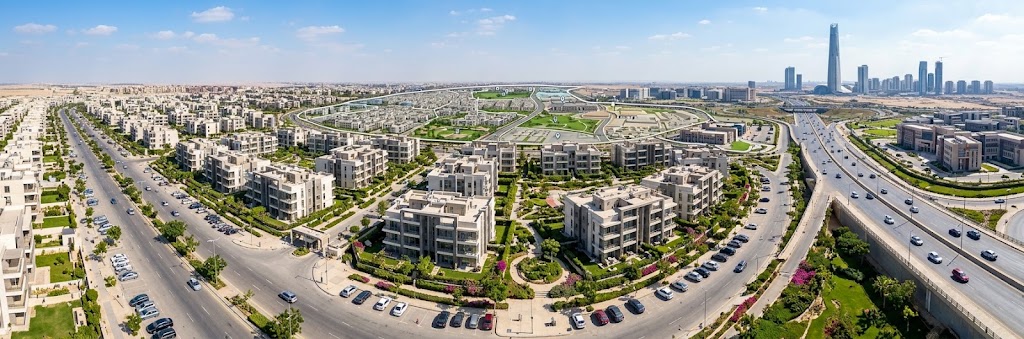
Looking across New Cairo’s urban development map over the coming years, population density and commercial gravity are shifting decisively eastward and southeastward—specifically into the golden zone framed by Teseen Street and the Middle Ring Road. This expansion places commercial axes New Cairo—led by Gamal Abdel Nasser and Mohamed Naguib axes—squarely at the center of growth for three fundamental reasons:
Direct Connectivity to the New Administrative Capital: Mohamed Naguib Axis and Gamal Abdel Nasser Axis act as vital transit links channeling daily vehicular flow from the heart of the Fifth Settlement and established residential districts straight toward the New Administrative Capital and Ain Sokhna Road. This transforms both corridors into daily transit and stopover hubs for tens of thousands of professionals, executives, and commuters.
Surging Residential Occupancy in Beit Al Watan, Al Andalous, and New Nargis: Surrounding neighborhoods have rapidly transitioned from active construction zones into thriving, lived-in communities. As thousands of families move in, real demand for everyday retail, banking, educational, and healthcare services is outstripping current commercial supply.
Scarcity of Remaining Front-Row Commercial Land: The vast majority of commercial, administrative, and medical plots directly fronting Gamal Abdel Nasser and Mohamed Naguib axes have already been launched or are well into advanced construction. For investors, this scarcity means acquiring a unit today secures an irreplaceable asset in a prime corridor—the single strongest catalyst for sustained price appreciation.
2. Simplified Feasibility Study: How to Calculate Return on Investment (ROI) Accurately
To execute a successful medical and administrative investment or commercial acquisition, you must treat your unit like an operating business with clear inputs and outputs. Seasoned Fifth Settlement investors rely on two core metrics to evaluate every opportunity:
Annual Rental Yield: Calculated by dividing net expected annual rent by the total cost of the unit (including the maintenance deposit and finishing costs, if applicable), then multiplying by 100. In prime spots along Mohamed Naguib and Gamal Abdel Nasser axes, rental yields typically range between 11% and 15% annually upon operational launch, compounding by 10% every year under standard commercial lease escalation clauses.
Capital Appreciation: The growth in the asset’s market value from initial purchase (during construction) through handover and operation. Historically, commercial and administrative properties along these two corridors have delivered 25% to 40% annual capital growth during the construction cycle as milestones are met and grand openings approach.
Financial Simulation Table: Projected Investment Scenarios on Gamal Abdel Nasser and Mohamed Naguib Axes
The table below provides an illustrative comparative model across three investment profiles based on Fifth Settlement market averages (figures are approximate for financial planning purposes):
| Investment Scenario | Recommended Unit Type & Size | Recommended Buying Strategy | Ideal Payment Term | Projected Rental Yield at Operation | Primary Investment Objective |
| Scenario 1 (Rapid Cash Flow) | Ground-floor retail shop (55 sqm + outdoor area) on Mohamed Naguib Axis | Buy in an under-construction project with over 60% structural completion | 4 to 5 years | 13% – 16% annually (leased to a flagship brand or F&B chain) | Maximize steady monthly income and cover installments via rental revenue |
| Scenario 2 (Security & Stability) | Fully finished medical clinic with AC (65 sqm) on Gamal Abdel Nasser Axis | Buy at first launch from a developer with a proven medical track record | 6 to 7 years | 11% – 14% annually (long-term leases to doctors and clinics) | Preserve capital with ultra-low operational and vacancy risk |
| Scenario 3 (Capital Growth & Resale) | Administrative office (80 sqm) in an integrated mixed-use mall on either axis | Enter with the lowest down payment during the First Launch phase | 7 to 8 years | 10% – 13% annually (or exit via resale before handover for capital gain) | Capture maximum capital appreciation with minimal upfront liquidity |
3. "Mandatory Lease" vs. "Leasing Authorization": When to Accept and When to Decline
While exploring shops for sale 5th Settlement, you will frequently encounter developers offering “Mandatory Lease” programs or “Leasing Authorization” agreements spanning 3 to 5 years with guaranteed annual returns. As a real estate advisor, I recommend evaluating these structures carefully:
Leasing Authorization: This is a strong value-add. A specialized property management firm markets and leases your unit to reputable brands in exchange for an agreed commission, without locking you into a capped rate below market value. It also ensures a balanced tenant mix across the mall.
Fixed-Return Mandatory Lease: Useful for hands-off investors seeking guaranteed income from day one of handover. However, verify that the guaranteed rental figure aligns with genuine market averages in the area, and ensure the contract does not prevent you from capturing market-rate rental increases once the mandatory period expires.
4. Pre-Contract Legal and Technical Due Diligence Checklist
To safeguard your capital and ensure a clean transaction, review these four essentials with your legal and real estate advisor before paying your contract down payment:
Verify the Ministerial Decree and Building Permit: Confirm that the land plot is officially zoned for commercial, administrative, and medical use, and that the number of floors offered for sale matches the permit issued by the New Cairo City Authority.
Specify Handover Standards in the Contract Annex: Whether your unit is delivered Core & Shell or fully finished, the contract must explicitly state clear ceiling heights, electrical load capacity (in kW), and HVAC and plumbing hookups—especially critical for clinics and restaurants.
Review Assignment and Resale Clauses: Ensure there are no restrictive lock-in conditions or excessive transfer fees (standard market fees range between 2.5% and 5%, or a modest flat fee) should you decide to resell the unit before completing your installment schedule.
Confirm Delivery Timelines and Delay Penalties: The agreement must clearly specify the handover date, the legal grace period (typically 6 to 12 months), and enforceable financial penalties payable by the developer in case of delivery delays.
5. Frequently Asked Questions (FAQ) on Future Outlook, Financials, and Contracts
Q: Is it better to buy multiple small units or one large unit on Gamal Abdel Nasser or Mohamed Naguib axis?
A: It depends on your target tenant profile. If you are aiming for major retail brands, banks, or large medical centers, a single spacious unit (90 to 150 sqm) is ideal because anchor tenants rarely consider cramped floor plates. Conversely, if you prefer risk diversification and easier resale liquidity, splitting your budget across two mid-sized units (50 to 60 sqm each) gives you greater leasing and exit flexibility.
Q: When is the ideal time to enter commercial real estate on these two axes?
A: The golden rule of real estate holds true here: “The best time to buy was yesterday; the second-best time is today.” Amid rising construction material costs and accelerating end-user demand along the Fifth Settlement’s main corridors, entering early with a financially solid developer shields you from periodic price hikes and locks in your price per square meter on long-term installments.
Q: How should I balance Gamal Abdel Nasser Axis and Mohamed Naguib Axis within my portfolio?
A: If your budget supports a longer-term horizon aimed at maximum capital appreciation and high-visibility frontages for flagship brands, prioritize Mohamed Naguib Axis. If your goal is rapid operational launch backed by dense daily neighborhood footfall and immediate medical or convenience retail demand with minimal vacancy risk, Gamal Abdel Nasser Axis is your strongest play.
Conclusion:
Entering commercial investment Gamal Abdel Nasser and Mohamed Naguib axes is far more than a simple property purchase—it is the strategic acquisition of an income-generating financial asset in one of the fastest-growing, most resilient corridors of Egypt’s real estate market. By pairing rigorous due diligence with a developer proven in operational management and prioritizing high-visibility frontages, you position yourself among the investors set to capture New Cairo’s urban growth for decades to come.
Let's discuss your next move >
Our specialized team will contact you ASAP.